


Stepping into Yale Repertory’s University Theater, you’re automatically enveloped in the vaudeville blues—a low-light carnality reminiscent of an underground jazz club. August Wilson’s Ma Rainey’s Black Bottom reenters at its originating house and, with the help of seasoned director Timothy Douglas, is accompanied by a smoky kind of glitz that immediately makes you shrug off your jacket and put on your dancing shoes. Douglas does an outstanding job of elevating an already quintessential show with his clear-sighted vision and succeeds at bringing the 1920 portion of Wilson’s American Century Cycle to a new kind of 20s. Audiences let out full-belly laughs and somehow leave with their hearts cut out. A production whose classic themes allow modern audiences to question the status of their race, class, and Gods, is a play that undoubtedly succeeds.
The mother of the blues, Ma Rainey (played by Maiesha McQueen), is late. Her producer, Sturdyvant (Neil Lerner), impatiently taps his foot, while manager Irvin (Jeff Parker) haphazardly attempts to buy her more time. Her band enters, consisting of four charismatic and distinct musicians: Culter, unofficial leader and trusted proxy to Ma (Terence Archie); Toledo, sensible and a voracious reader (Dion Graham); Slow Drag, whose name leaves nothing to the imagination (Ray Anthony Thomas); and finally Levee, an ambitious artist attempting to convince Sturdyvant to produce his original music while confidently walking the stage in his brand-new silver shoes (Jimmie J.J. Jeter). They banter and battle about everything from art and music to Cola and sandwiches to enlightening dissections of race in 1920s America and, finally, God, until Ma Rainey makes a grand entrance—complete with a fur coat, an emerald green dress, and a certain audacity that forces you to immediately revere her. The band tirelessly attempts to please Ma, her crew, and each other, often failing and occasionally succeeding. Act one’s (and two’s) ending will have your eyes welling with tears from both laughter and perhaps some reflective sadness.
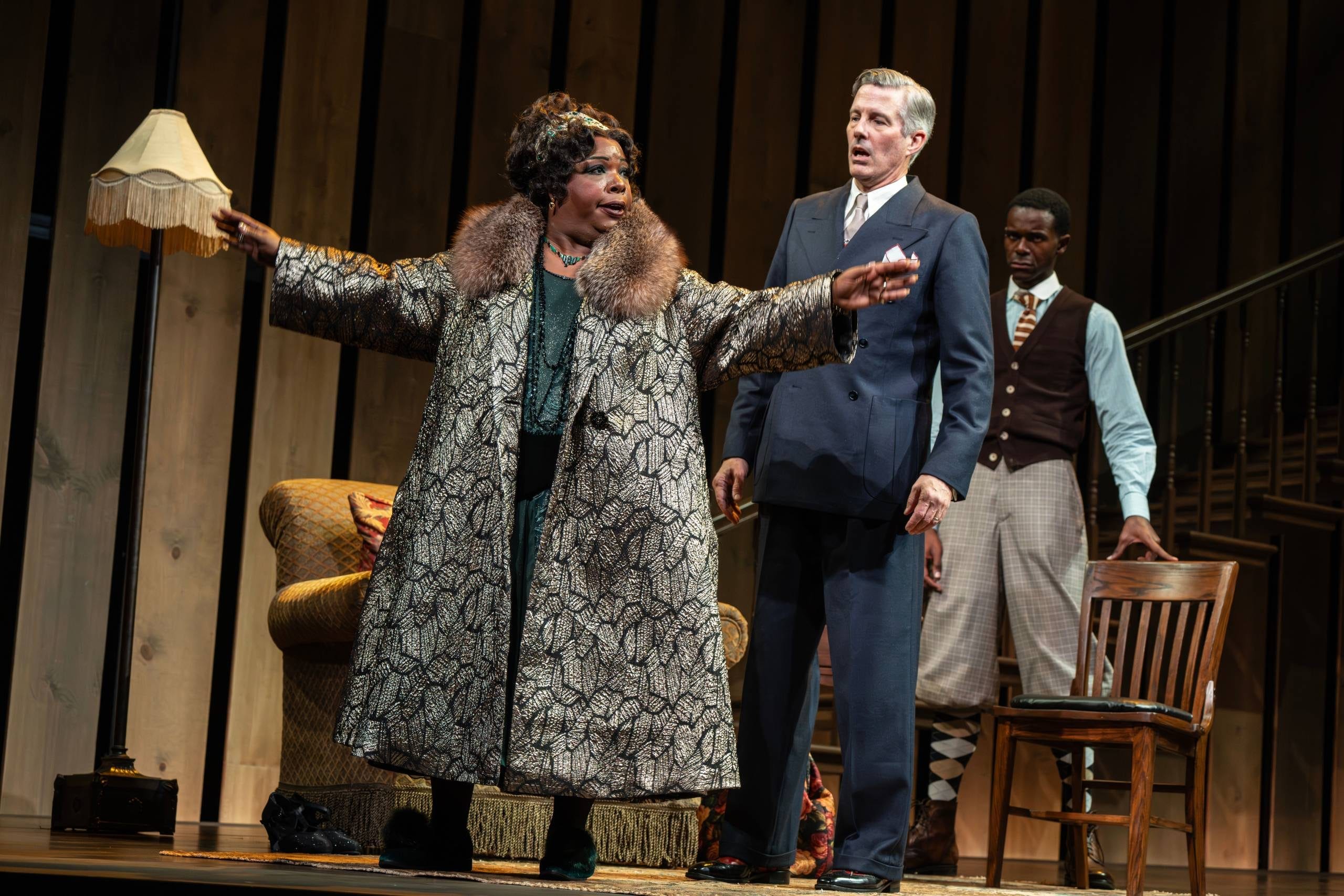
The show is a masterclass in collaborative acting. The “core four” have a bubbling-over chemistry that is distinct and undoubtedly connects the audience to the stage and each other, creating an unspoken offstage community.
Dussie Mae (Brittany Antoinette Davis), resident seductress and Ma’s lover, brings bubbling sex appeal—all neck and sultry long-legged crosses. Davis ensures Dussie is ingrained in the audience’s mind, a breath of air when coming up from the band’s second-hand smoke.
McQueen’s Ma Rainey takes up the stage with a booming presence demanding respect—certainly a mother—whose vocal rasp and guttural low range not only fit into the genre, but almost become the notes on Levee’s yellow-papered sheet music, her voice riding on the brassy wave the band calls upon.
Jetter’s performance as Levee, and I say this with genuinity—is one of the best I’ve witnessed so far. Jetter truly leaves everything out on the stage. He makes bold, dynamic choices and cultivates an impressive multidimensionality within his character, bringing a broader nuance to the show, as well as an entrancing voice.
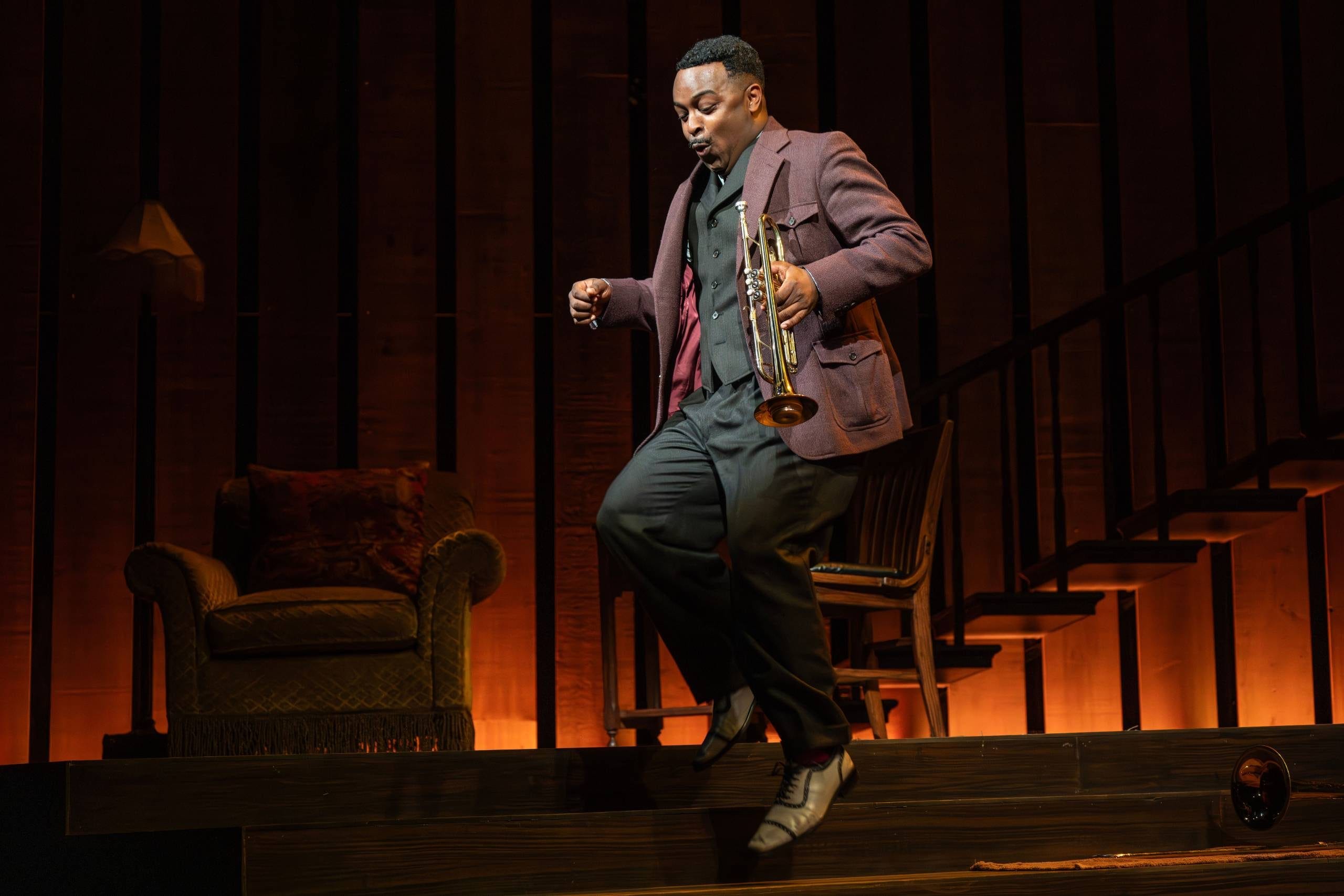
The set no less adds to the cohesion and genius of the show, with Richard Lee’s angled set design one of clear merit and thoughtfulness. Slanted wood panels on the left side, a velvet red curtain to the right, both peaking to meet at the head of the white recording booth, which Sturdyvant and Irvin only ever go inside. Stairs up to the booth line the wood wall, and here’s where Douglas’ impressive blocking comes into play—Sylvester and Dussie Mae can be seen slowly creeping up the stairs in the background, never to reach the top, either sitting quietly in thought or dancing before being told to sit down. Meanwhile, the band resides primarily at the literal lowest part of the stage, the pit-like “bandroom.” There’s a consistent atmosphere here, one that completely sucks the audience inwards, making the theater (and audience) feel like a part of the set. The lighting is comparatively cinematic and meaningful, cool and warm colors levied specifically to enhance connotation.
It comes as no surprise that Wilson’s show also invites such a responsorial audience where even his daughter’s presence contributes to the opening night crowd-- members comment and chuckle, all to build a broader community around the timeless show. One of Wilson’s familiar talking points was the idea that playwriting and theatergoing are not singular acts, unlike the novel. Here, we watch, dissect, laugh, and cry together—an occurrence brought on by a stunning cast, an excellently written play, and the masterful cultivation of a comforting space that seamlessly allows for such. This show will let you “laugh at life”, while also prompting you to ask necessary questions—What makes real music real music? What happens when Black women cause a disturbance? Is the American God a white man’s God? Answer these questions for yourself in the theater, and, please, create some more, all while drowning in the blues.
Ma Rainey’s Black Bottom continues at the University Theater through October 17th. For further information and ticket reservations, visit: www.yalerep.org.
What a wonderful article by such a talented writer!